


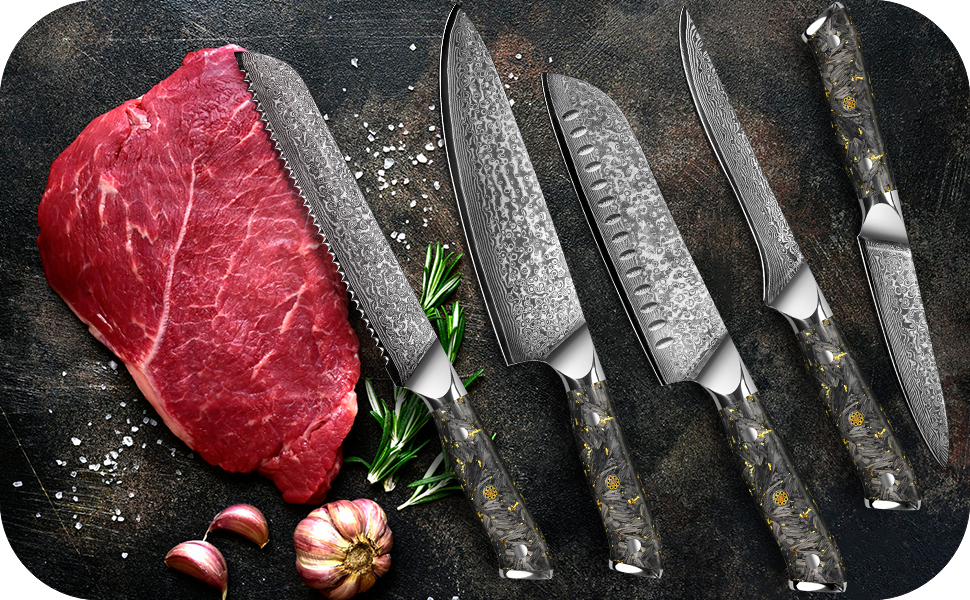
Select kitchen knifeWhat truly impacts the daily cooking experience is usually not the appearance, but whether it makes ingredient preparation smoother, cuts cleaner, and less strain on the wrist. For home cooks, cooking enthusiasts, and even those who need to quickly process meat and vegetables, the right knife can directly change the work rhythm. This article will help you establish a practical judgment framework, covering uses, selection criteria, basic knife types, and maintenance methods, to avoid making decisions based solely on brand or price.
First get to know kitchen knife core uses
The value of a good kitchen knife lies not only in its ability to "cut," but also in its ability to make every step of food preparation more efficient. When cutting vegetables, a stable blade reduces food slippage; when cutting meat, a sharp edge reduces tearing; and when handling fruit or bread, the right knife shape prevents crushing the internal structure. For most households, the most commonly used knives are usually chef's knives, santoku knives, small knives, and bread knives. Understanding their respective uses is more practical than trying to acquire a complete set at once.
If your current knife starts to feel strained, doesn't produce clean cuts, or requires frequent sawing and pressing halfway through a cut, it's time to re-evaluate your knife selection. Don't start with the most expensive knife; instead, work backward from the dishes you cook most frequently to find the most suitable type.
When is it necessary to change the tool?
The most common situation is that the knife becomes dull, but people mistakenly believe it's just a matter of poor technique. When you find that you flatten tomatoes when cutting them, slip when cutting onions, or pull the fibers when cutting chicken breast, it usually means the blade is no longer sharp. Another issue is a poor grip, such as a handle that is too slippery, too heavy, or the center of gravity is off, which becomes particularly noticeable after preparing ingredients for a long time.
Some people buy knives that look nice, but don't fit their workflow. In this case, you should first consider whether you frequently use them for quick chopping, precise slicing, or cutting bread and meat before deciding whether to replace them, rather than just looking at the model or price tag.
The 4 most important factors when choosing a kitchen knife
When choosing a kitchen knife, the most important factors to consider are usually the grip, weight balance, steel material, and maintenance costs. These four aspects directly affect how comfortable it is to hold every day, how effortless it is to cut, and whether you'll want to keep using it for a long time. Many people are initially attracted by the blade's texture or fancy design, but what truly differentiates a knife is the stability you feel the moment you grip it.
Different hand shapes and cutting methods require different blade lengths, blade angles, and handle types. People who are used to pushing and slicing will usually be more sensitive to blade balance and tip control; those who prefer quick slicing and chopping will pay more attention to weight and handle stability. If you frequently cook many dishes, instead of buying a highly specialized knife, it's better to choose a medium-sized multi-purpose knife that is "good enough and easy to use" first, and then add other functional knives later.
Grip and balance
A good knife should feel natural to hold, rather than requiring you to consciously adjust your finger angles. The shape of the handle, the surface's non-slip grip, and whether the blade's center of gravity is within your control all affect fatigue levels during extended preparation. If the knife is too heavy, it will be tiring to chop finely chopped ingredients; if it's too light, it may lack stability when handling harder ingredients.
If possible, try holding the knife in your hand and simulate cutting vegetables to see if your wrist feels natural, if the back of the blade feels comfortable, and if there are any pressure points on your fingertips. Just because it looks nice for a short time doesn't mean it will be comfortable in the long run. Truly durable everyday knives are usually ones you don't even notice are there, but which give you peace of mind every time you use them.
Material and maintenance costs
Stainless steel and high-carbon steel each have their advantages. Stainless steel is generally easier to care for, making it more suitable for busy families; high-carbon steel tends to maintain a crisp cut more easily, but requires more careful drying and rust prevention. If you don't want to spend a lot of time maintaining it after each use, materials with lower maintenance requirements are more suitable.
The type of steel used in a knife also affects the frequency of sharpening and the long-term feel. Some knives emphasize their Japanese VG10 steel core, 67 layers of Japanese Damascus steel, or higher hardness settings. This information usually indicates the edge performance and edge retention, but ultimately it comes down to whether you're willing to follow its maintenance routine. For most users, the most important balance is maintaining a consistently sharp edge without making maintenance a burden.
Price and durability
The differences between entry-level, mid-range, and high-end knives go beyond just appearance; they often reflect the quality of the steel, craftsmanship, balance, and long-term user experience. Entry-level knives are suitable for establishing usage habits first; mid-range knives typically offer a better balance between feel and durability; and high-end knives may focus more on cutting feel, materials, and overall finish.
However, a high price doesn't necessarily mean it's right for you. If you only cook occasionally each week, you might not need to pay extra for a high-end knife; if you prepare ingredients daily, you'll be more likely to experience a better grip, less maintenance, and more consistent cutting performance. When choosing a knife, consider how often you'll use it before allocating your budget; this is usually more reliable than simply looking at discounts.
The most worthwhile basic knife types to buy first
If you want to create the most practical kitchen setup, it's most sensible to start with a few core knife types. You don't need to buy every knife immediately; instead, first identify the tasks that occur most frequently, and then match the knives to those tasks. For most households, the first thing needed is usually a chef's knife or a Santoku knife, followed by supplementary tools like small knives and bread knives.
Chef's knife: The most versatile starting point
A chef's knife is the most typical all-purpose starting point, suitable for chopping vegetables, meat, garlic, processing spices, and most everyday ingredients. Its blade can usually handle both long-distance pushing and basic chopping, making it very user-friendly for beginners.
If you only plan to buy one kitchen knife first, a chef's knife is usually the best option to consider first. It can cover the most tasks and can also help you determine whether you prefer a longer, heavier, or lighter knife feel, before deciding whether to add a specialized knife.
Santoku sword: leaning towards lightness and precision
The Santoku knife is characterized by its relative lightness, making it suitable for short-distance cutting, slicing, and handling of small details. It often provides a more flexible sense of control when processing vegetables, fruits, herbs, or thinly sliced ingredients.
If you don't like heavy knives or prefer delicate movements, a Santoku knife will be particularly convenient. It may not be more "versatile" than a chef's knife, but for those who need precision and a light, nimble feel, it will often become the knife they pick up most often each day.
Small knife/peeler: The mainstay for detailed work
A small knife or peeler is mainly used for peeling, trimming fruit, removing stems, cutting small ingredients, and various fine-tuning tasks. For tasks like peeling apples, trimming strawberries, and processing potato skins, a small knife offers better control than a large knife.
It's not a main-purpose all-purpose knife, but it's highly efficient in situations requiring precise, close-to-the-hand operation. If you frequently make bento boxes, salads, or need to handle large quantities of small ingredients, this knife is a worthwhile second knife to acquire.
Bread knife: for handling the hard crust and the soft interior.
The serrated design of a bread knife reduces the risk of crushing the interior when cutting through the hard outer crust. This type of knife is generally more stable than a flat-bladed knife when cutting toast, baguettes, croissants, or other puff pastry baked goods.
It can also be used on some soft fruits, such as tomatoes or ripe fruit, because the serrations can easily bite into the surface. However, if you are cutting regular vegetables or meat, a bread knife is not the primary tool; you should use a more suitable knife type.
Which cooking tasks are suitable for different knife types?
Understanding the relationship between knife type and ingredients will make it easier for you to make the right choice. Many people think that one knife can handle everything, but in reality, different tasks have very different requirements for blade length, blade shape, and control methods. Dividing your knives into different roles is often more efficient than trying to force yourself to use the same knife for everything.
| Cooking Mission | More suitable knife type | Key points of use |
|---|---|---|
| Chop vegetables and spices | Chef's knife, Santoku knife | The key is to maintain control, achieve clean cuts, and reduce sticking to the knife. |
| Cutting meat and separating ingredients | Chef's knife, butcher's knife, boning knife | The key focuses are on stability, smooth cutting, and application-specific division of labor. |
| Sliced bread and puff pastry | bread knife | The key is in the serrated teeth biting in and avoiding crushing the interior. |
| Detailing | Small knife, peeler | The focus is on flexibility and precise control. |
Chop vegetables and spices
When cutting vegetables, a thin-bladed, lightweight, and easy-to-control knife is generally more advantageous. When the blade can steadily penetrate the food, preparation is faster, and the cut is cleaner. When handling herbs, onions, garlic, or densely packed vegetables, a knife shape that complements a pushing-cutting rhythm is usually less likely to stick to the blade.
If you frequently make salads, stir-fries, or marinades, choosing a chef's knife or Santoku knife with a clean cutting feel will be more beneficial than buying a bunch of knives with vague uses.
Cutting meat and separating ingredients
When handling cooked meat, raw meat, or making small cuts, blade stability and control are crucial. Good meat-cutting performance is not just about making cuts, but about producing clean cuts without tearing the fibers, and allowing for more precise control over the thickness of the cuts.
If you frequently cook chicken breast, steak, grilled meat, or fish fillets, you might start to want more specialized slicing knives, boning knives, or longer, thinner blades. At this point, it's not about simply seeking a universal tool, but rather about acquiring tools based on your meat preparation process.
Slicing bread and fragile ingredients
Bread, cakes, or certain crispy-crusted foods are most susceptible to being flattened by a flat-bladed knife. A serrated knife can first grip the surface and then gradually cut through, minimizing damage to the internal structure.
If you frequently cut baked goods, a bread knife is almost a necessity. Insisting on using a chef's knife to cut them not only results in messy cuts but may also deform the food, affecting both the overall taste and appearance.
How to determine if a knife is truly good?
A truly good knife isn't just about how sharp it is when you first open the box; you also need to test its cutting ability, grip, and stability. When testing a knife in a store or opening the box for inspection, it's best to translate your subjective impressions into several comparable factors, such as how easy it is to grip, how effortless it is to use, and how easily it gets stuck. This way, you're less likely to make a wrong decision based on temporary novelty.
What to look for when trying to hold it?
When testing the grip, first check if the handle is stable, if your fingers feel comfortable on it, and if it's slippery. If you need to constantly adjust your grip, the knife may not be suitable for you. For extended use, the pressure points are more important than appearance, as they directly affect hand fatigue.
What to look for during test cuts
When test-cutting, observe whether the knife cuts into the food smoothly, whether the cut is clean, and whether the food gets stuck during the cutting process. A good knife usually balances speed, accuracy, and ease of use, requiring less force to press down. If the edges of the food break or the knife frequently deviates after cutting, it means there is room for improvement.
Regular maintenance and storage determine how long a knife will last.
Even the best kitchen knife can quickly lose its performance with daily use if not properly maintained. Cleaning, drying, sharpening, and storing all directly affect safety and lifespan. Many people think maintenance is troublesome, but actually, by following a few fixed steps, you can significantly extend the usability of your knives.
Daily cleaning and rust prevention
It's best to clean and dry the knife immediately after use, avoiding prolonged soaking in water. Even with stainless steel knives, it's not recommended to leave them in the sink for too long, as moisture and residue can affect their surface condition. High-carbon steel knives require even more attention to dryness and storage conditions.
Sharpening and regular maintenance
The purpose of sharpening a knife is to restore the cutting edge to a state where it can effectively cut; while routine minor maintenance slows down the dulling process. Many people wait until they can no longer cut before dealing with it, which actually makes things more difficult. If you can do the work when you feel the cutting feel starting to decline, it usually saves time and makes it easier to maintain a stable feel.
Safe storage methods
Sheaths, knife holders, magnetic racks, and drawer protectors each offer different spatial and safety advantages. The key is to protect the blade and prevent cuts when retrieving items. If kitchen space is limited, choosing a method that you can consistently use is more practical than the most aesthetically pleasing storage solution.
How to choose a kitchen knife under different budgets
If you have a limited budget, the best strategy isn't to buy a lot at once, but to start with one or two of the most frequently used knives. Most families can begin with a chef's knife or a santoku knife, and then add smaller knives, bread knives, or more specialized knives based on their usual cooking needs. This way, you can control your budget and avoid buying knives you won't use.
First purchase order
The first priority is usually a multi-purpose chef's knife or a medium-sized general-purpose knife, as it covers the most everyday tasks. The second step is to consider whether you frequently handle fruit, bread, or minor trimmings, and add smaller knives or bread knives as needed. This approach makes it easiest to build practical experience.
Advanced upgrade direction
Once you use the knife more frequently, it becomes more meaningful to consider knives that better suit your preferences for feel, materials, and cutting characteristics. Details such as higher-quality Japanese steel, specific handle designs, higher hardness, or hand-forged and fully molded handles can all make long-term use more comfortable. The purpose of upgrading should be to improve efficiency and stability, rather than simply pursuing higher specifications.
If you're planning to buy your first or second knife for the kitchen, first figure out what you'll use it for, then consider the grip, material, and maintenance costs. This will usually help you choose the one that truly suits your needs. kitchen knifeStarting with the dishes you cook most often, you can build a core knife that is easy to use, hold, and maintain. You can then gradually add other functional knives later. This approach is smarter and more in line with your actual cooking rhythm than buying everything at once.
Share:
What is a "butcher's knife"? Its uses, differences in knife types, and a buying guide.
Sakura Blade Black Wood Series: The Secret Weapon from Novice to Vegetable-Chopping Master